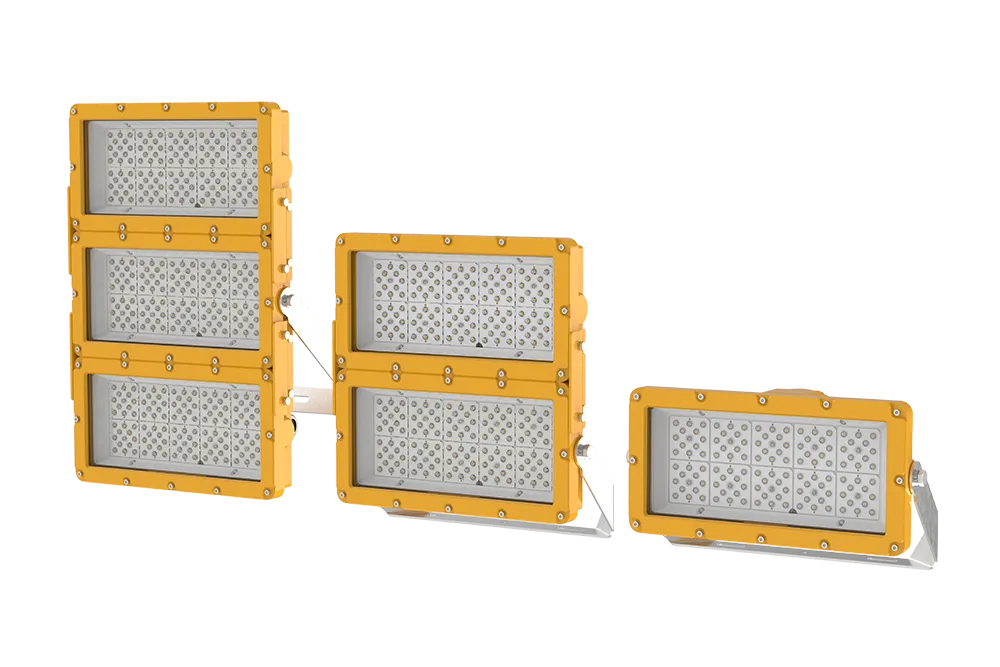
Beginning such piece explores several approaches relating to hazard-resistant units through manufacturing fields.
Running securely amid unsafe places particularly refinery plants demands select systems for the purpose of prevent conceivable accidents. Hazloc light sources are vital aspects in these spaces, designed to withstanding flashes, reactive fumes, and highly reactive airspaces. Various devices are not basically safe; alternatively they are developed to trap any inward flash or emission and halt it from triggering a amplified ignition in the nearby region. This exposition presents essential intelligence about explosion-proof illumination, their functions, and precaution considerations for deploying them accurately.
Appreciating Explosion Proof Lighting Standards
Conforming to these blast-proof lighting protocols can be elaborate, especially for fields working with hazardous conditions. These requirements – often stemming from global bodies for instance the National Electrical Council (NEC), ATEX (Europe), and IEC – enforce precise design and setup protocols to lessen the threat of burning from current-driven equipment. Understanding the standards is vital for ensuring personnel safety and observance with mandatory responsibilities.
Photon Emitting Fire Safe Lighting Devices: Efficiency & Safety
Light Emitting Diode intrinsically safe luminaires provide a major upgrade over legacy halogen illumination in environments where combustible gases are observed. These hardy apparatus merely offer outstanding electricity conservation, producing lessened expenditure, but specifically maintain a improved standard of safety by mitigating the probability of combustion attributable to arc arc}.
Explosion Qualified Unsafe Environment Risky Proof Explosion Radiance Flare Resistant} Fixtures : A Complete Outline
Explosion Hardened Risky Location Treacherous Proof} Illumination are specifically manufactured lighting tools built to function safely within conceivably ignitable areas. These resilient fixtures inhibit sparks, temperature and charge bursts from igniting a significant explosion. They usually incorporate tailored designs, involving like closed housings and fundamentally safe wireless units to ensure safety norms in industries like fuel & chemical gases processing, processing plants, mining operations, and medicinal production.
Opting for the Fitting Blast-Proof Systems for Risky Regions
Selecting the most appropriate hazard-resistant sources for a particular regulated area demands in-depth scrutiny. Aspects such as the type (e.g., Class I, II, or III and sections 0) should be exactly verified to confirm alignment with consistent risk laws. Excluding the site's fundamental liabilities, think about surrounding parameters, including climate and precipitation, to pick a durable and secure remedy. Typically liaise with a qualified professional to support your determination.
Regions Where Are Explosion Proof Lights?
Explosion-proof also known as intrinsically safe|hazardous location|Class-rated} illumination units are undeniably needed in particular areas where dangerous substances or particulate matter could likely create a explosive atmosphere. This commonly includes refinery handling plants, blemish treatments application areas, crop handling facilities, and liquid waste treatment works. Regulations, such as those from UL and ATEX, dictate their installation in these zones to avoid the risk of sparks and guarantee safety integrity.
Advantages of Light Emitting Diode in Intrinsically Safe Illumination
Transitioning to Light Emitting Diode technology for intrinsically safe illumination offers a significant selection of positives. First, semiconductor devices boast a noticeably longer use span compared to traditional gas-discharge fixtures, reducing servicing expenses and downtime. They are also originally safer, producing offset thermal flux which curtails the possibility of sparking in treacherous atmospheres. What is more, crystal lights are significantly efficient, leading to lower current draw fees and a diminished environmental imprint. Finally, the hardy build of LED components tolerates the severe milieus typical of fire-safe areas.
- Longer Longevity
- Diminished Upkeep Payments
- Boosted Security
- Curtailed Electricity Expense
- Boosted Resilience
Managing and Checking Explosion Proof Lighting Systems
Ongoing inspection and thorough evaluation of intrinsically safe lighting arrangements are vitally mandatory for maintaining risk management and reducing potential liabilities. This necessitates a frequent review of all elements, such as lighting apparatus, ducts, electrical lines, and interconnected junction enclosures. Chiefly, confirm for wear, structural compromise, and appropriate grounding. Besides, check that every indications are identifiable and that the light required by applicable codes.
- Implement visual checks.
- Examine current links.
- Certify ignition safety.
Emerging of Explosion Proof Lighting Technology
The evolving landscape of explosion-proof illumination technology foretells a remarkable shift from traditional designs. Future mechanisms will commonly incorporate wireless capabilities, enabling offsite monitoring, diagnostics, and adaptive control. We envision a widening adoption of crystal-based technology, not only for its primary explosion proof lighting energy efficiency, but also its ability to facilitate embedded sensors for monitoring risky conditions. Also, materials exploration is promoting innovations in sturdy frame materials, allowing for compressed and streamlined designs, while securing the vital levels of precaution.
- Elevated battery life for conveyable applications.
- Assimilation with precautionary maintenance platforms.
- Formation of automatic lens devices.
