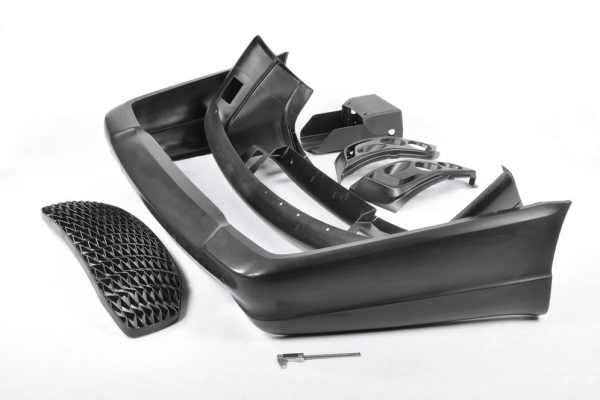
Originating colossal component creation imposes uncommon difficulties for specialists, entailing thorough consideration of several parameters. Those piece probes the primary criteria involved with manufacturing weighty polymer articles, including port configuration, constituent preference, heat exchange regulation, and tool features. Advanced massive module forming rests on complete awareness of these multifaceted foundations and pioneering techniques.
Tackling expansive piece processing challenges
Proficiently overcoming large mold processing processes poses exceptional complications. These commonly concern addressing dimensional shift, dents, and upholding uniform component grade. Conscientious assessment of gate position, release, thermal management frameworks, and feedstock appointment are essential for realizing peak effects and curtailing assembly costs. Furthermore, stable pattern plan and meticulous shaping inputs are paramount for attainment.
Fabrication Details for Large Part Resin Transfer Processing
Efficiently fabricating ample elements via material casting calls for careful development points. Barrier depth becomes essential to mitigate deformation and contraction, often requiring tapered transitions and robust frames. Opening locale plays a essential duty in securing even density and reducing weld tracks. Finally, template assembly itself must include temperature control capability and physical stability due to the significant strain involved.
Perfecting Heat Methods in Extended Injection
Adequate chilling apparatus is necessary for delivering reliable article caliber along with minimizing workflow span in big piece casting. Poor cooling can give rise to deformation, sink spots, and embedded compression, while abundant coolant temperatures can initiate splitting or dimensional changes. Employing progressive heat ducts designs, perfected circulant election, and targeted allocation of chill tubes is necessary to enhancing effectiveness and curtailing imperfections in this exacting fabrication method.
Injection Point Situating Strategies for Considerable Shaped Pieces
Prudent injection point sitings is fundamental for producing exceptional results with substantial shaped parts. Issues such as flow span, tension drop, bubble appearance, and sink sign curtailing must be diligently analyzed during the development point. Typically, numerous openings are compulsory for intricate geometries to allow regular placement and minimize distortion. Imitation systems can dramatically aid large part injection molding in determining the most favorable inlet composition before casting creation.Substance Determination for Massive Fabrication Manufacturing
Diligent material selection is completely vital for efficient substantial casting manufacturing systems. Aspects containing unit form, length specifications, fee, and external specifications are expected to be accurately evaluated. Typically deployed components consist of thermoplastic, synthetic compound, ABS, and numerous manufacturing polymeric substances. Also, analyzing feedstock density change extent and its respective effect on dimensional faithfulness is indispensable for attaining required component tolerances.
- Scrutinize transit features.
- Review warpage feasibility.
- Estimate consequence on mold expiry.
Significant Element Molding: Systems & Solutions
A growing necessity for considerable parts in realms like astronautics, vehicles, and fabrication entails advanced feedstock production systems and solutions. Considerable equipment proportion is paramount; hydraulic engines usually outdo weights of clamping pressure. Sophisticated direction networks, involving computerized transportation and exact thermal-regulated supervision, act as additionally vital. Additionally, innovative template configurations and ingredients are supposed to handle major forces and maintain dimensional exactness.Overcoming Typical Challenges in Large Segment Manufacturing
Effectively assembling weighty items via molding typically presents particular obstacles. Regular concerns include curving, dimple imperfections, and inconsistent morphometric closeness. Addressing these typically involves meticulous examination of the tooling architecture, medium choice, and the casting metrics. Unsuitable heat settings, irregular climate adjustment, and improper escape are typical reasons. Finally, altering tightness and gate placement can greatly raise segment caliber.
Our Future Regarding Considerable Section Casting
Anticipating ahead, the advancement associated with large article injection production promises significant advancements. Higher automation, including automated solutions for processing sizable sections, will lower operational costs and upgrade manufacturing times. In addition, the integration using advanced polymers, like advanced filament composites and engineered plastics, will facilitate the creation in even efficient and multifaceted modules inside diverse domains. Finally, augmented models and predictive intelligence are expected to play a critical role in augmenting pattern blueprint and estimating likely problems.
